PC
Godot
GDScript
Beatbox, Photoshop
7
Game Design
Level Design
Narrative Design
Psybot is a short 2D Retro Puzzle Platformer built in Godot within 10 Weeks. Taking inspiration from Retro Platformers, Psybot explores the simple Mechanic of grabbing and throwing enemies over the course of 4 Distinct Areas and 29 Levels.
You play as Psybot, a Ruin Exploration Bot that fall down a ravine and onto a crystal that impales it and also grants it telekinetic powers. Still following it's Prime Directive Psybot uses these newfound Powers to explore and fight through the ancient ruins of a Crystal Worshipping underground civilization.
Our team of 7 was constructed at random and given the Task of creating a Game within 10 Weeks, split into 5 designated Milestones for each step of the Development process. With the aid of our Teacher's feedback and biweekly meetings with a surrogate 'Shareholder' to evaluate our progress.
Our given reference was the game Bubble Bobble, a retro Platformer with a simple Mechanic and single-screen Levels.
Psybot was the first full game anyone in the Team had worked on and the First Game I had the honour to Design.
Through one of the most productive and efficient Brainstorming sessions I've ever had: we had decided on a Mechanic, Main Character and Setting. Enabling me to start working on ideas for Level Mechanics immediately.
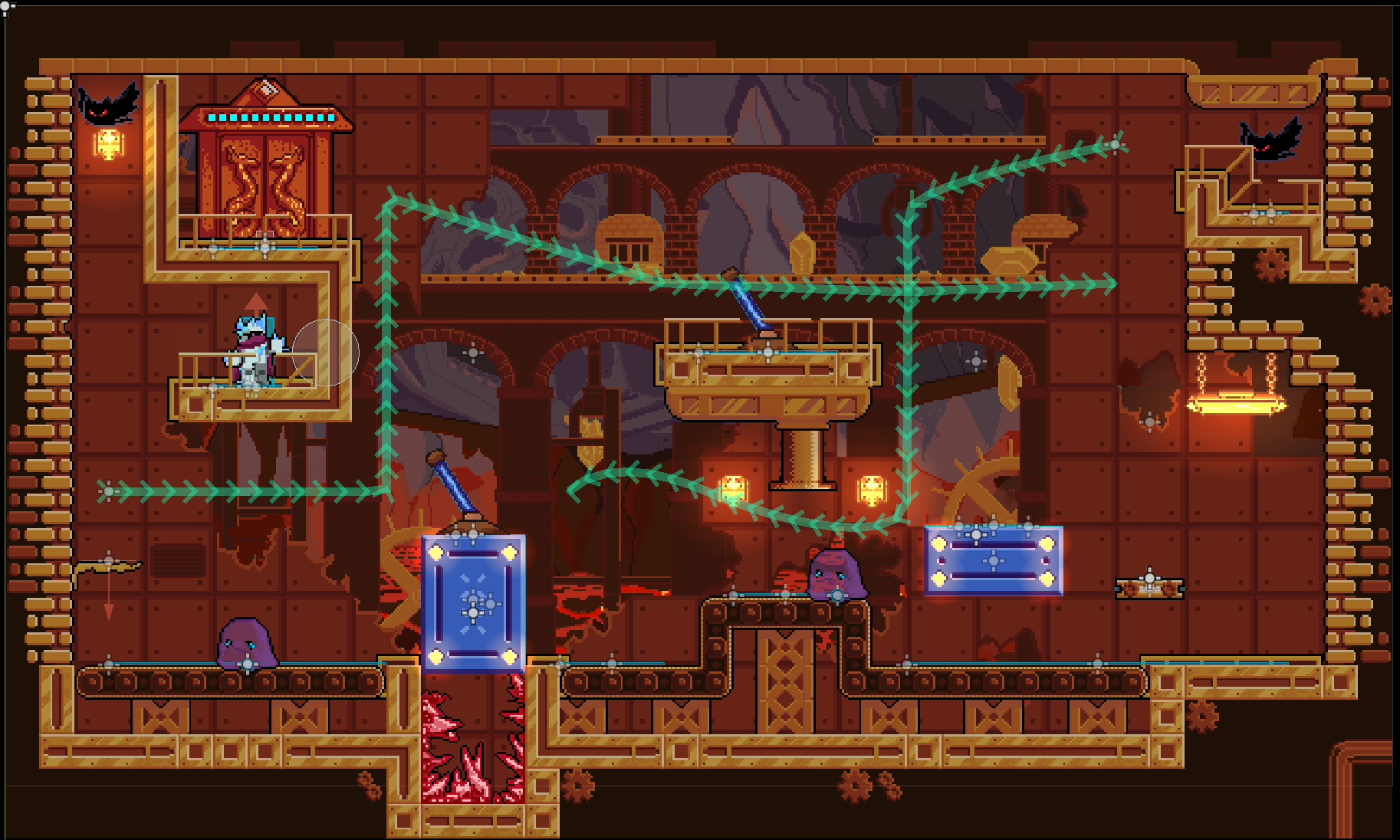
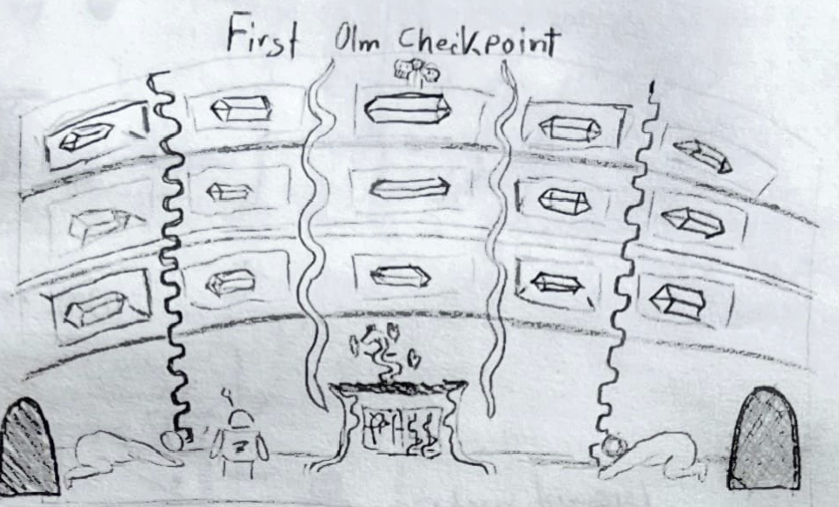
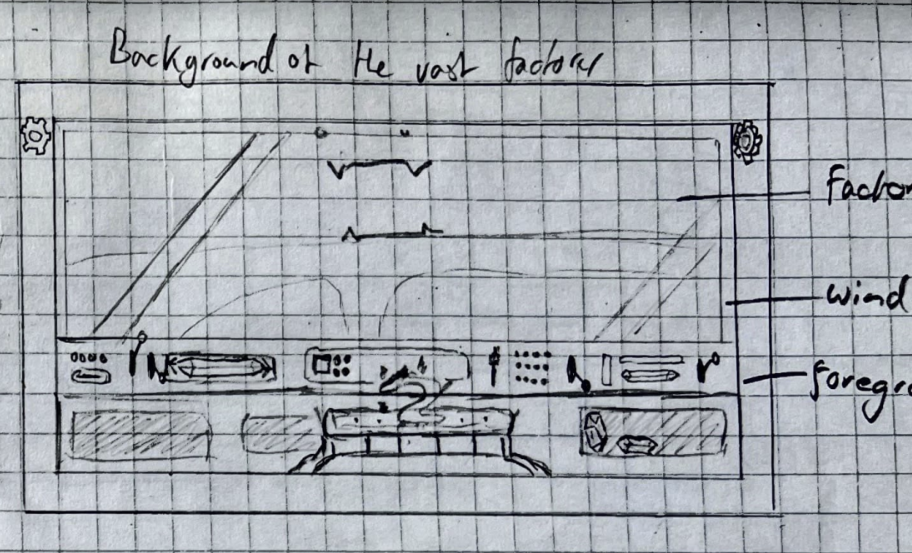
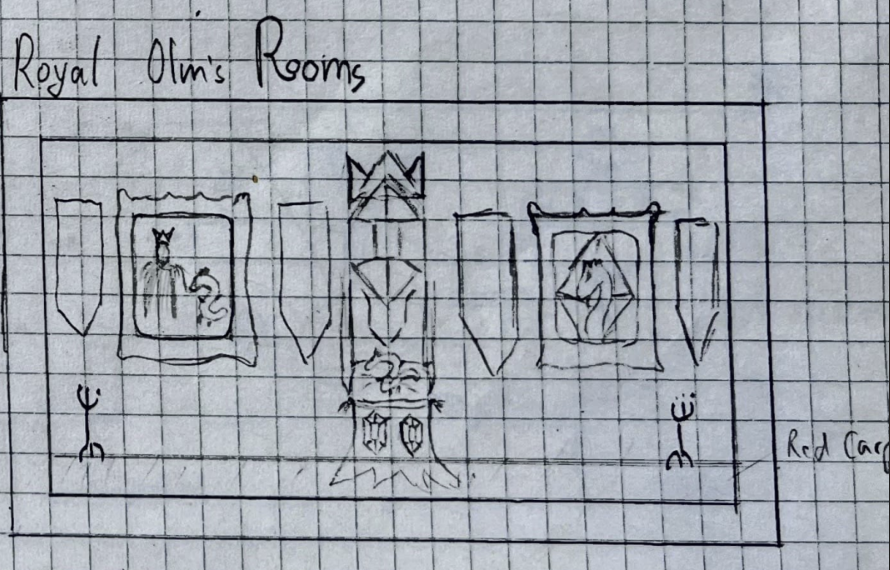
From then on I gradually built upon my first Ideas, defining and refining the Gameplay Loop, Core Mechanics and Enemies. Concurrently I worked on the Worldbuilding, using the planned Mechanics to inspire the Areas Psybot traverses. Creating Lore and even an Alphabet for the Ancient Civilization to aid and inspire the Artists' Environments and Backgrounds.
Though we had to crunch for the last 2 weeks we managed to bring the Game to a finished state that we were all happy with before the Deadline.
.png)
.png)
.png)
.png)
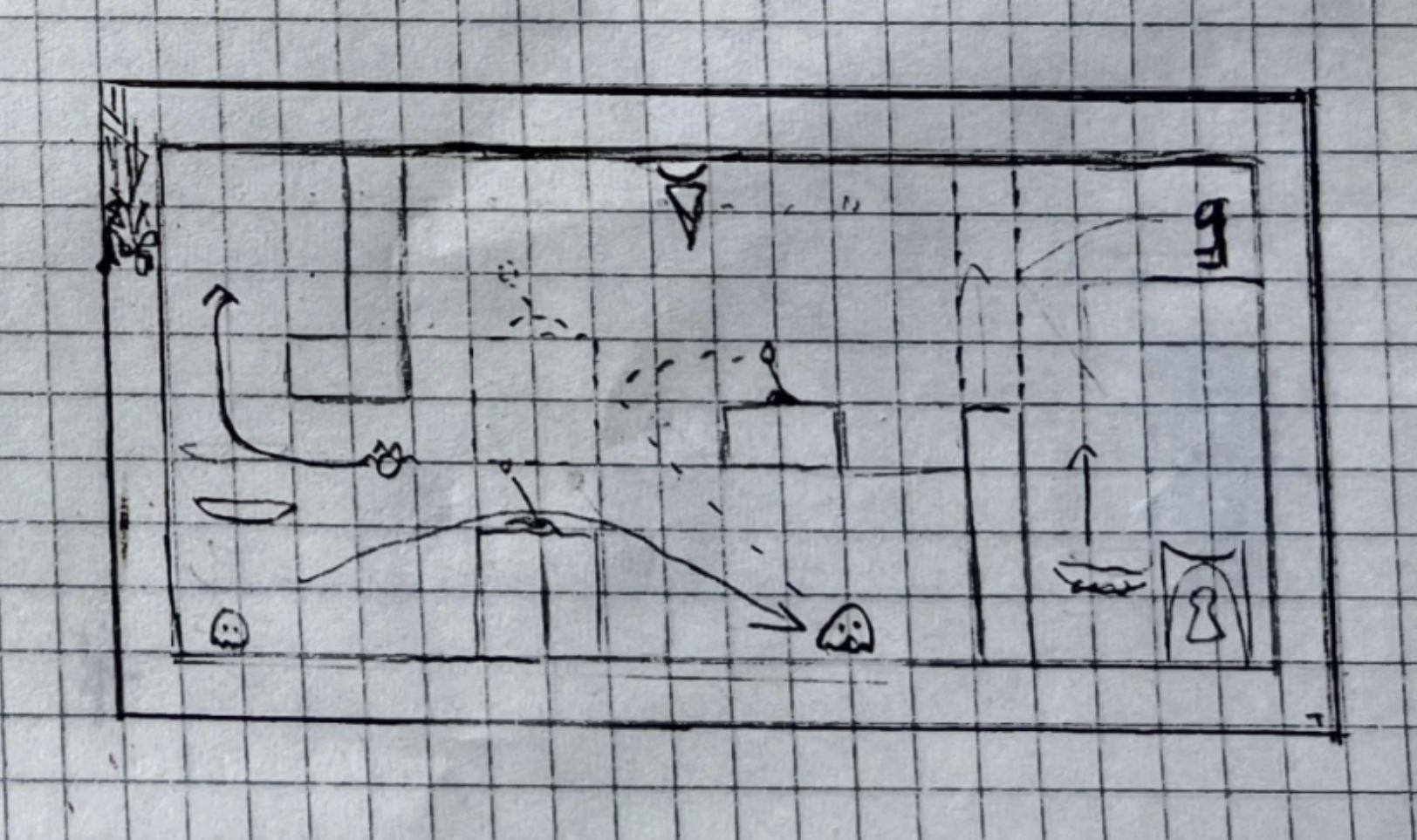
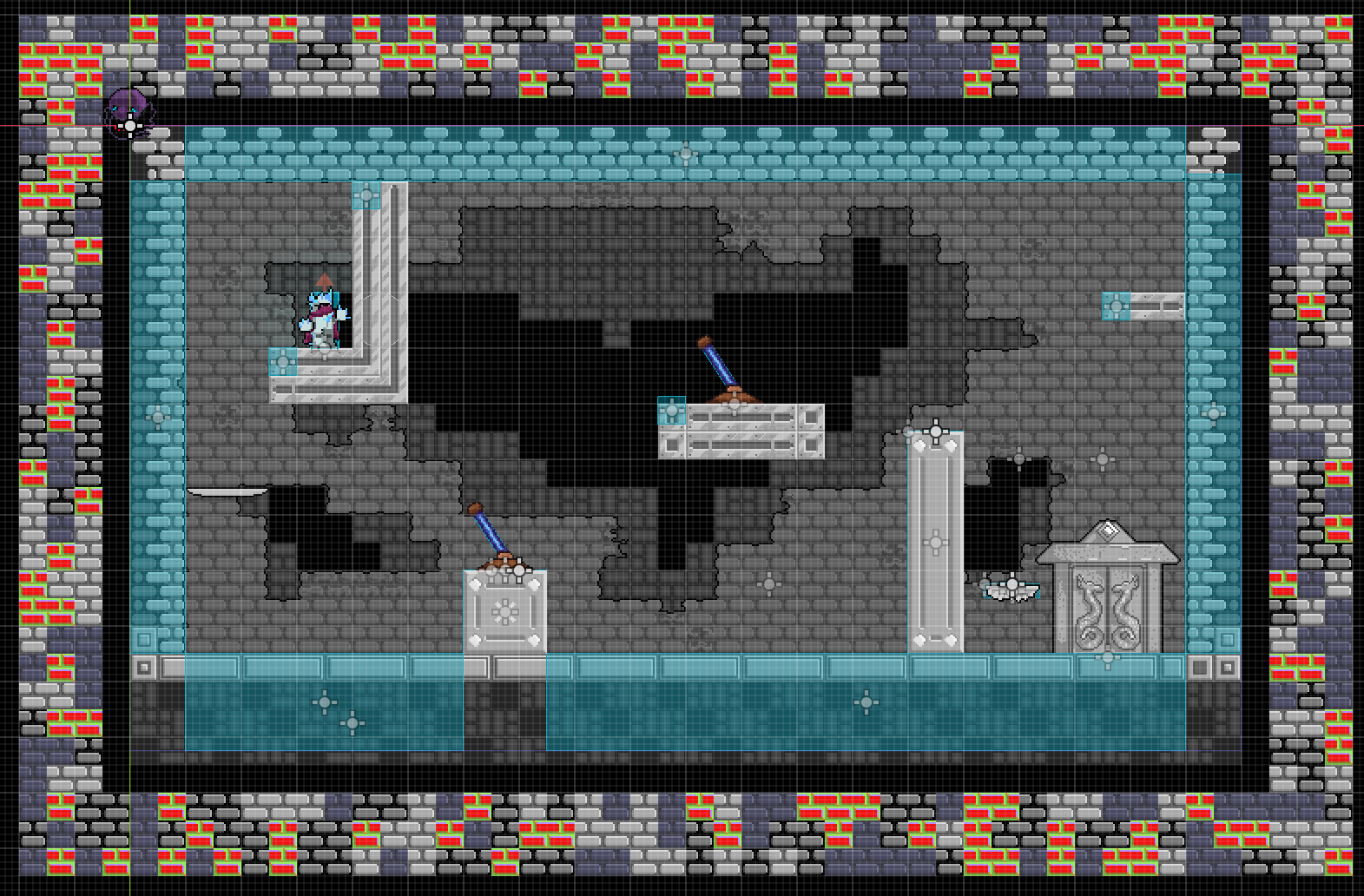
.png)
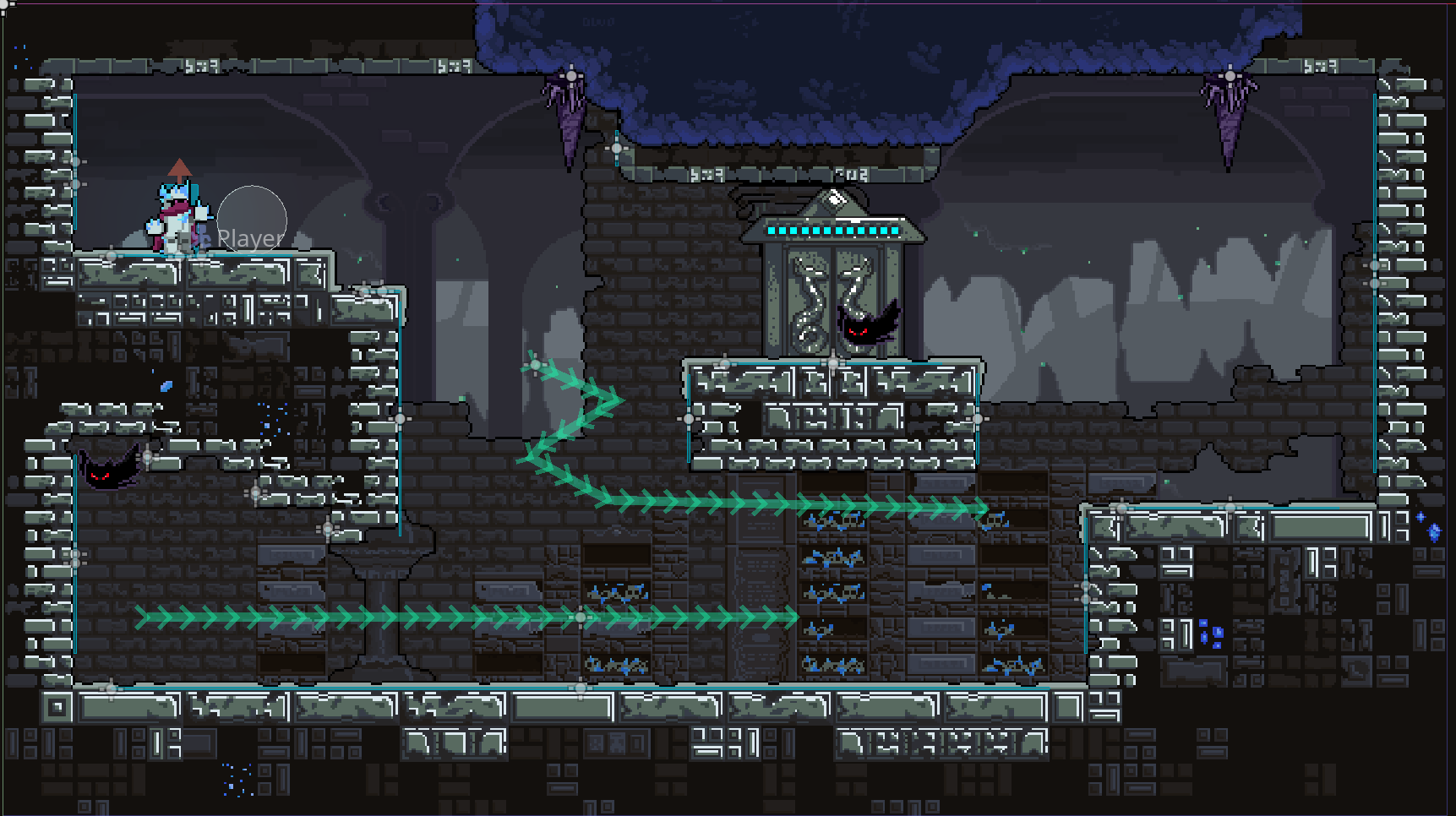
.png)
.png)
.png)
.png)
.png)
.png)
.png)
.png)
.png)
With four artists and one Designer, Programmer and Producer each our Team had everything we needed to create Psybot, except for a Sound Designer.
Our Workflow was highly collaborative, so we split the task of creating Sound Effects and Music between ourselves as well as some royalty-free Music from the internet.